
Deciding whether to rent or buy forestry equipment is one of the most consequential financial decisions a contractor, forestry company, or land manager will face. The right choice can significantly impact your operational costs, cash flow, and long-term business flexibility. With harvesters, forwarders, forestry mulchers, and harvesting heads representing major capital investments — often ranging from hundreds of thousands to over a million dollars — understanding the true benefits and drawbacks of each approach is essential. This guide breaks down the key considerations so you can make a confident, informed decision for your specific operation.
The financial case for renting forestry equipment
For many forestry operations, especially smaller contractors or those taking on short-term projects, renting forestry equipment offers compelling financial advantages. The most immediate benefit is the elimination of large upfront capital expenditure. Instead of committing hundreds of thousands of dollars to a single machine purchase, renting allows you to preserve that capital for other business needs — whether that means hiring skilled operators, investing in safety training, or simply maintaining a healthy cash reserve.
Rental agreements also convert equipment costs into predictable, manageable expenses. Rather than dealing with fluctuating maintenance bills, unexpected repair costs, or the financial shock of a major mechanical failure, you pay a fixed rental rate and the equipment provider typically handles maintenance and servicing. This predictability is particularly valuable when bidding on contracts, as it allows for more accurate job costing.
- No large upfront capital outlay required
- Predictable monthly or project-based costs
- Maintenance and servicing often included in rental agreements
- Rental payments may be fully tax-deductible as a business expense
- Improved cash flow for day-to-day operations
Additionally, renting protects you from equipment depreciation. Forestry machines lose value over time, and with rapidly advancing technology, an owned machine can become outdated relatively quickly. When you rent, the depreciation risk sits with the rental provider, not with your business.
When buying forestry equipment makes more sense
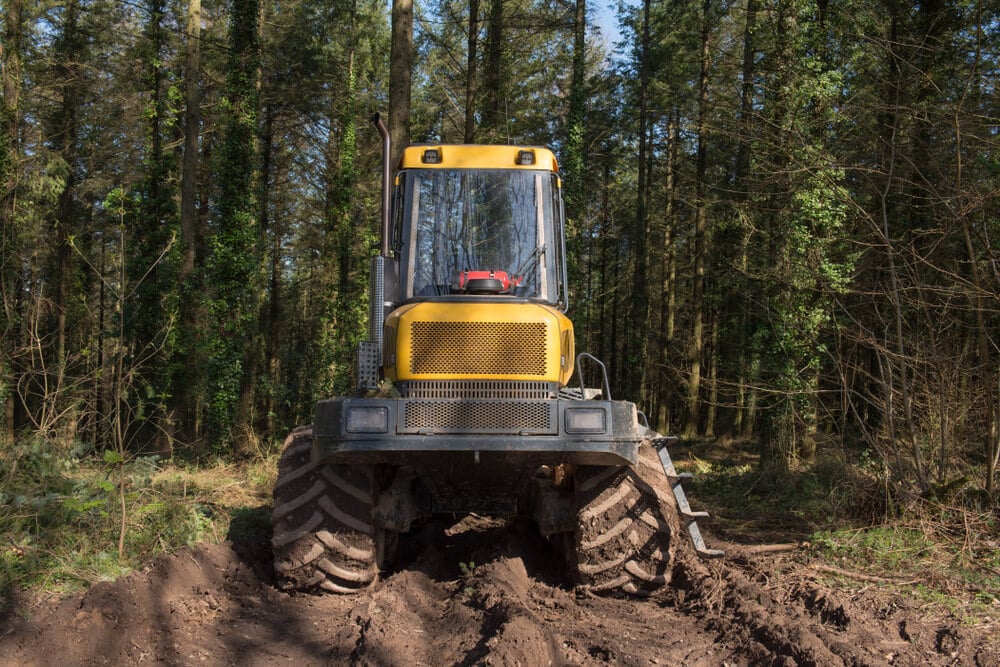
Ownership has its own set of advantages, particularly for large-scale operations with consistent, long-term workloads. If your forestry company runs machinery for the majority of the year across multiple job sites, the cumulative cost of renting can eventually exceed the purchase price of equivalent equipment. In that scenario, buying forestry equipment outright — or financing a purchase — may deliver better value over a five-to-ten-year horizon.
Owning your equipment also gives you complete operational control. You can modify the machine to suit your specific working conditions, schedule maintenance on your own terms, and deploy the equipment whenever and wherever you need it without worrying about availability windows or rental contract restrictions. For companies with specialized workflows or unique terrain requirements, this flexibility can be a significant operational advantage.
There are also potential financial benefits on the ownership side. Owned equipment appears as a business asset on your balance sheet, which can support financing applications and business valuations. Depreciation can often be claimed as a tax deduction, and if the machine is well-maintained, it retains resale value that can be recovered when you eventually upgrade your fleet.
- Lower long-term cost for high-utilization operations
- Full control over machine availability and scheduling
- Asset value on the balance sheet supports business financing
- Freedom to customize equipment for specific site conditions
- Potential resale value at end of useful life
Factors that should influence your decision
The rent vs buy decision is rarely black and white. Several key factors should shape your thinking before committing either way. Project duration and frequency are perhaps the most important variables. If you have a single six-week clearing contract and no certainty of follow-on work, renting almost always makes more financial sense. If your operation runs year-round with a full order book, ownership begins to look more attractive.
Consider also the type of equipment involved. High-cost, specialized machines like multi-head harvesters or large forwarders may be more practical to rent, especially for operations that only need them periodically. On the other hand, commonly used equipment like forestry mulchers or track carriers that form the backbone of your daily operations may warrant outright purchase.
Technology cycles matter too. Forestry machinery is evolving rapidly, with newer models offering improvements in fuel efficiency, precision cutting, operator comfort, and telematics integration. When you rent, you have the flexibility to access the latest technology as it becomes available without being locked into an aging asset. Owners, by contrast, may find themselves operating equipment that lags behind the current standard within a few years.
Finally, consider your access to capital and credit. A business with strong cash reserves and favorable financing terms may find ownership more viable. A growing contractor still building its financial base may find that renting preserves the liquidity needed to take on more contracts and scale sustainably.
Hybrid approaches: combining rental and ownership strategically
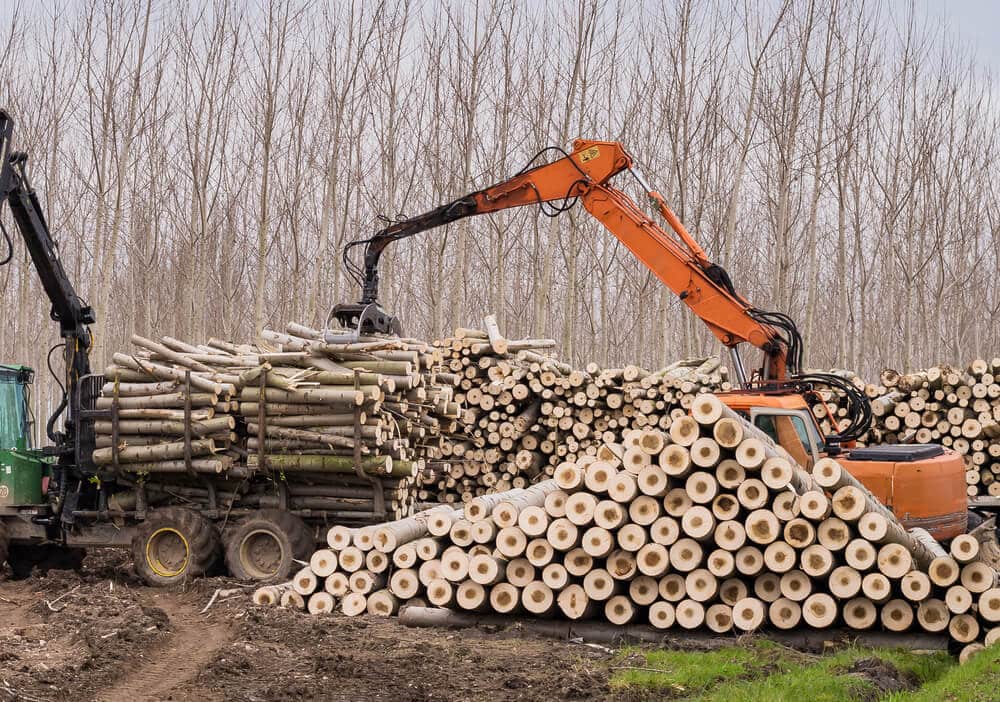
Many successful forestry operations don’t choose one model exclusively — they use both strategically. A company might own its core fleet of frequently used, proven machines while renting specialized or high-cost equipment for specific projects. This hybrid approach offers the best of both worlds: cost efficiency for predictable, high-use equipment combined with flexibility and access to specialized technology when needed.
Rental platforms also provide an excellent opportunity to trial equipment before purchase. If you’re considering adding a new machine type to your fleet — say, a track-based harvester for steep terrain — renting one for a project first gives you hands-on experience with the machine’s performance in real working conditions. That knowledge is invaluable when making a final purchase decision.
Short-term rental can also serve as a contingency when owned equipment is down for repairs or scheduled servicing, keeping your operation running without costly delays. Building a relationship with a trusted rental provider ensures you have access to reliable backup machines when you need them most.
Making the right decision for your forestry operation
There is no universal answer to the rent vs buy debate in forestry. The right choice depends on your project pipeline, financial position, equipment utilization rates, and long-term business strategy. What matters most is that the decision is made deliberately, with a clear understanding of all the costs and benefits involved — not simply based on short-term thinking or industry convention.
Take the time to calculate your true cost of ownership, including financing, insurance, depreciation, maintenance, and storage. Compare this against realistic rental costs for the same equipment over the same period. Factor in the value of flexibility, technology access, and cash flow preservation. When you approach the decision with that level of detail, the right path forward becomes much clearer.
Ready to explore your options? Visit Harvesting Machine Rentals to browse equipment comparisons, rental guides, and expert advice tailored to forestry professionals. Whether you’re looking to rent for your next project or researching your next major equipment investment, our platform has the resources to help you make the most informed decision possible. Get in touch with our team today to discuss your specific operational needs.