
Choosing the right forwarder is one of the most consequential decisions a forestry contractor can make. Whether you are managing softwood thinnings, large-scale clear-cuts, or selective harvesting operations, the forwarder you select directly impacts your productivity, fuel costs, terrain adaptability, and overall profitability. With dozens of models on the market — ranging from compact 6-wheel machines to heavy-duty 8-wheel giants — making the right choice requires a clear understanding of your operation’s specific demands. This guide walks you through the essential selection criteria so you can make a confident, informed decision.
Understanding forwarder size classes and load capacity
Forwarders are typically categorized by their load capacity, which ranges from around 8 tonnes for small machines up to 20 tonnes or more for the largest models. Selecting the right size class is not simply about maximizing payload — it is about matching the machine to your terrain, timber volume, and haul distances.
Small forwarders (8–12 tonne capacity) are well suited for thinning operations in dense stands, sensitive terrain, or plantations where soil compaction must be minimized. Their lower ground pressure and tighter turning radius allow them to navigate between trees without causing significant damage to residual stands or forest soils.
Mid-size forwarders (12–16 tonnes) represent the most versatile segment of the market. They perform well across a wide range of terrain types and harvesting scenarios, making them the preferred choice for many general contractors who need a single machine that can handle diverse assignments.
Large forwarders (16–20+ tonnes) deliver maximum efficiency in high-volume clear-cut operations where haul distances are long and timber volumes justify the cost. However, their significant weight demands careful consideration of soil conditions to avoid costly ground disturbance and environmental compliance issues.
- Small class: ideal for thinning, sensitive soils, steep or narrow terrain
- Mid class: best all-round choice for mixed operations
- Large class: optimized for high-volume, flat to moderate terrain
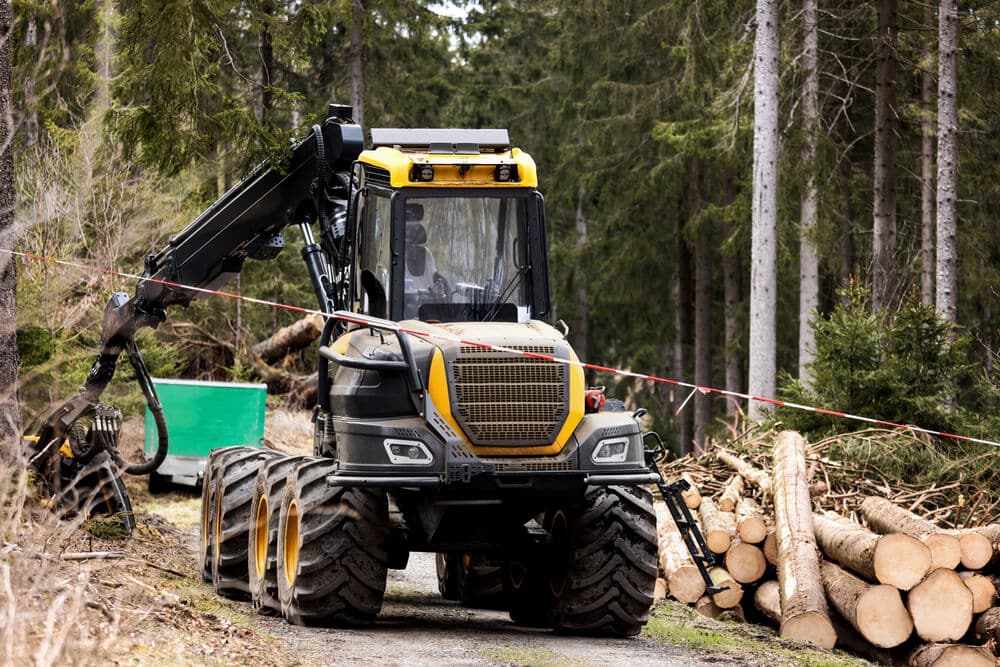
Key technical specifications to evaluate in a forwarder
Beyond load capacity, several technical specifications should guide your forwarder selection. Ignoring these details can lead to poor machine performance, excessive maintenance costs, or mismatches between your equipment and your operating conditions.
Engine power and fuel efficiency
Engine output, typically expressed in kilowatts, determines how well the forwarder handles challenging gradients and heavy loads. Modern machines from manufacturers like John Deere, Ponsse, Komatsu, and Logset now offer Stage V-compliant engines that balance raw power with improved fuel economy. On long production cycles, even a modest improvement in fuel consumption can translate into thousands of euros in annual savings.
Boom reach and crane performance
The crane system is the heart of forwarder productivity. Boom reach — typically between 7 and 11 metres — defines how wide a corridor the machine can strip in a single pass. A longer reach reduces the number of machine repositions required, which directly boosts cycle efficiency. Pay close attention to crane lifting moment (measured in kilonewton-metres), rotation speed, and hydraulic response time when comparing models.
Bogie axles and ground pressure
Bogie axles equipped with wide tires and optional tracks significantly reduce ground pressure, making the forwarder far more capable on wet, soft, or ecologically sensitive soils. If you regularly work in environments with seasonal wetness or protected ground, investing in a machine with optimized bogie systems is not optional — it is essential for both performance and environmental compliance.
Matching the forwarder to your terrain and operating conditions
No forwarder is universally suited to all terrains. One of the most common mistakes contractors make is purchasing or renting a machine based solely on brand reputation or price, without thoroughly assessing their specific terrain conditions.
In steep or mountainous terrain, look for forwarders with enhanced articulation angles, high-traction drive systems, and active load-stabilization features. Some manufacturers offer purpose-built steep terrain configurations that provide exceptional stability on slopes exceeding 35 degrees.
In flat, high-volume boreal or temperate forests, prioritizing crane efficiency and load capacity is more critical than ground mobility. Here, larger machines with extended boom reach and automated load optimization systems will deliver the best return on investment.
Contractors working in mixed environments — switching between thinnings and final felling, or moving between forest types across different seasons — benefit most from a mid-size forwarder with a modular setup, allowing configuration changes between assignments without major downtime.
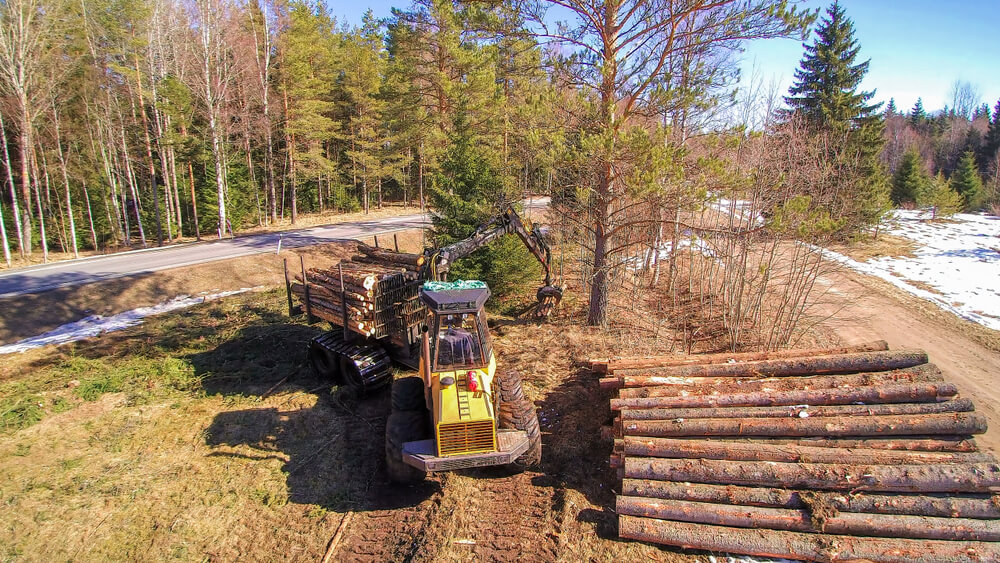
Rental versus purchase: making the right financial decision
For many contractors, especially those growing their business or taking on project-specific work, renting a forwarder is a strategically sound alternative to outright purchase. Rental allows you to access the right machine for each job without bearing the full capital expenditure, depreciation risk, or long-term maintenance obligations of ownership.
Renting is particularly advantageous in the following scenarios:
- When you need a specific machine size class for a short-term contract
- When you want to trial a new model or brand before committing to a purchase
- When your current machine is under repair and you need to maintain productivity
- When seasonal demand peaks require temporarily expanding your fleet capacity
When evaluating rental options, always verify machine age, maintenance records, available service support in your operating region, and whether operator training is included. A reliable rental partner should be transparent about machine condition and offer responsive technical support during your rental period.
Operator comfort and technology integration
Modern forwarders are sophisticated machines, and operator ergonomics play a direct role in daily productivity. A fatigued or uncomfortable operator makes more errors, completes fewer loads per shift, and is more likely to cause machine damage. When assessing any forwarder, evaluate cab design, seat quality, control layout, visibility, and noise levels.
Technology integration is equally important. Leading machines now offer load optimization software, real-time telematics, GPS-based route planning, and automated crane functions that reduce operator workload while improving accuracy and fuel efficiency. These features may add to the initial cost, but their long-term productivity gains are well documented across the industry.
Conclusion
Selecting the right forwarder is a multi-dimensional decision that goes far beyond comparing price tags. By carefully evaluating load capacity, terrain compatibility, technical specifications, operator comfort, and financial strategy, contractors can significantly improve their forestry logistics and operational efficiency. Whether you are planning to rent or purchase, making an informed choice upfront will save you time, money, and operational headaches throughout your contract. Ready to find the right forwarder for your next operation? Explore our full range of forwarder resources, comparisons, and rental guidance at Harvesting Machine Rentals — your expert partner for smarter forestry equipment decisions.